
What 2025 Taught Us About Immersive Training

2025 represented a defining step in the continued development of immersive training. Across Europe and beyond, XR increasingly moved from individual pilot projects toward more structured use within existing training frameworks. Driven by training modernisation initiatives, evolving operational requirements, and technical progress, organisations explored how immersive technologies can complement established training methods rather than replace them.

As Leif Petersen, CEO & Founder of HOLOGATE, puts it:


“XR training is becoming what we envisioned from the start, a practical tool that strengthens professional training and preparation. The trust our partners place in us shapes every decision we make.”


This understanding shaped HOLOGATE’s work throughout the year and framed how immersive training was discussed, applied, and evaluated across different sectors.

From XR Technology to Training Infrastructure

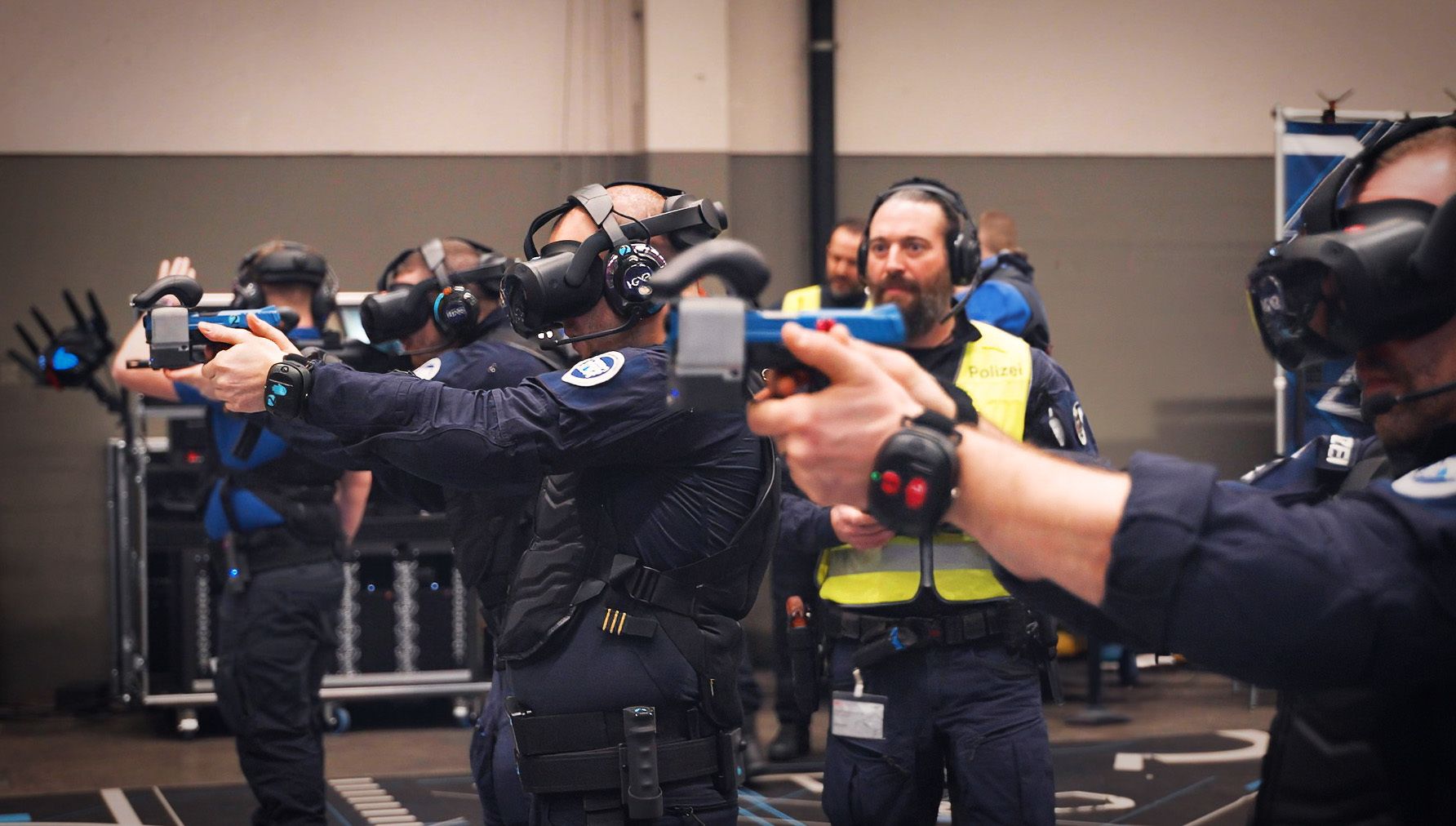
One of the clearest developments in 2025 was that immersive training was increasingly treated as part of training infrastructure rather than as a standalone technology. Organisations across public safety, defence, and enterprise are integrating XR into existing routines, using it where traditional training reaches its limits; whether due to safety constraints, logistical effort, or the need to train complex and critical situations.

In this context, cost and efficiency became increasingly relevant. Immersive training allows scenarios to be repeated without extensive setup, travel, or material wear, helping organisations train more frequently while keeping effort and resources predictable.

Our immersive HGXR systems address these requirements. HGXR solutions combine high-performance XR technology with immersive environments, realistic equipment, multiuser training, and scenario-based control. 

The aim is not to replace established training methods, but to extend them. Enabling structured, repeatable training that fits into existing schedules and budgets.

From Experience to Shared Direction


As XR training became more established in 2025, expectations around its use became clearer through daily operation. While requirements differ from one organisation to another, a common focus emerged across projects: immersive training must integrate smoothly into existing structures, operate reliably in regular use, and support meaningful preparation under real conditions.

Throughout 2025, more and more partners placed their trust in immersive training based on our HGXR platform. Today, our XR training solutions are in use with police forces in Berlin, Lower Saxony, Saxony-Anhalt, Hesse, and North Rhine-Westphalia, as well as with police organisations in Switzerland and within the Bundeswehr.


Working across these varied contexts reinforced a shared understanding. Even though training structures and objectives differ, immersive systems must remain predictable, adaptable, and straightforward to operate. For trainers, this means spending less time managing technology and more time focusing on training content. For organisations, it means planning training with clearer time, effort, and cost parameters.


Direct exchange played an important role in reaching this alignment. During the first HGXR User Group Meeting in Munich, partners and clients came together to exchange experiences with the HOLOGATE team and with one another. The discussions focused on real feedback: what works well in practice, where limitations still exist, and what is needed next. This open exchange directly informs the ongoing development of the HGXR Platform.

What This Means for 2026

For HOLOGATE, 2026 will focus on scaling responsibly. This includes expanding the team across development, systems engineering, design, operations, and beyond while continuing to work closely with partners and users. Growth is not about moving faster, but about ensuring that immersive training remains reliable, economically viable, and effective as its use expands.

As immersive training continues to gain relevance across sectors, we are always interested in people who want to contribute their expertise, curiosity, and perspective to this field and help shape the next phase of XR-based training.


Related Posts